
You’ve come across the term “bucking hips” and it’s left you a bit puzzled. It’s a phrase that pops up in various contexts, from the gym to the dance floor. My goal here is to give you a complete and straightforward explanation of what this movement is, what it means in different situations, and how it’s performed.
By the end, you’ll have a clear understanding of bucking hips meaning, removing any confusion or ambiguity. We’ll cover the core definition, its application in fitness and dance, and a guide to the movement’s mechanics.
What Exactly Is a Hip Buck? A Clear Definition
Bucking hips refers to a powerful, sharp, and often rhythmic forward thrust of the pelvis.
Let’s break it down. The movement starts in your posterior chain—that’s your glutes and hamstrings—and your core. These muscles work together to create a forceful pelvic tilt.
Imagine a powerful hinge closing or a spring releasing energy forward and upward. That’s what a hip buck feels like. It’s not a slow, smooth motion; it’s quick and explosive.
Now, bucking hips is different from other movements. For example, a hip roll is slower and more fluid. A pelvic tilt is subtle and controlled.
In contrast, a buck is all about speed and force.
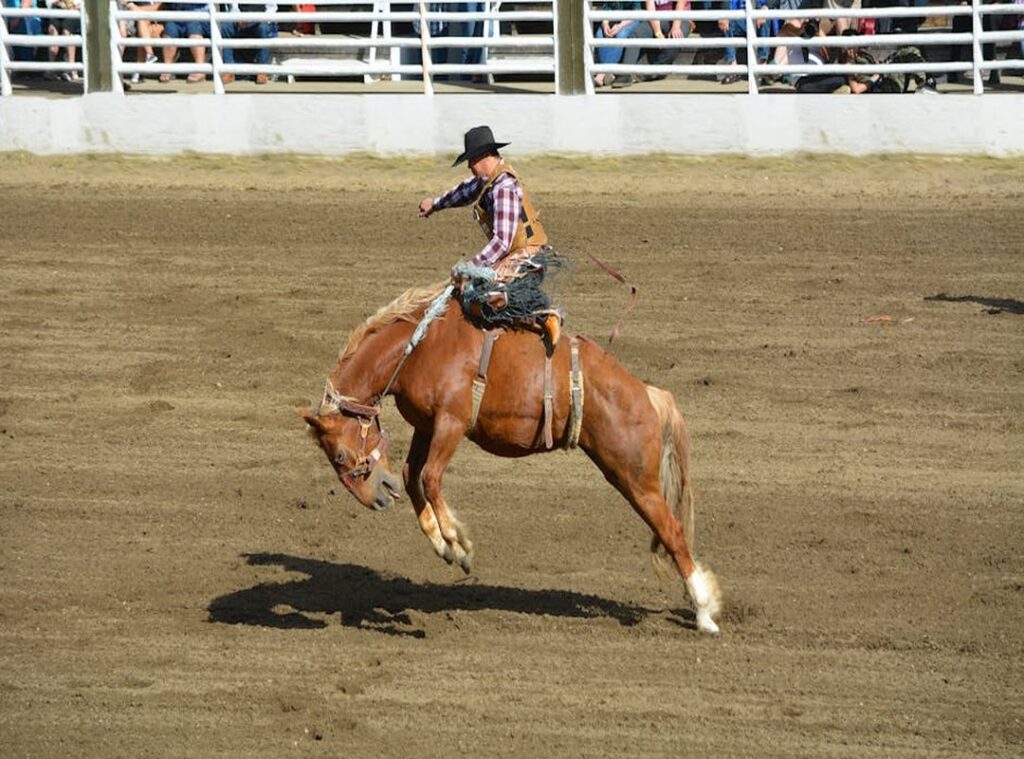
The term bucking comes from the powerful kick of a horse. Just like a horse, the hip buck is an explosive, sudden action.
Where You’ll See This Movement: Context is Key
Let’s talk about the bucking hips movement and where you might see it. In fitness, it’s a key part of exercises like the glute bridge and hip thrust. These movements focus on the peak contraction phase, which is essential for building glute strength and power.
In dance, especially in genres like hip-hop and reggaeton, you’ll see this movement used to express rhythm, accent beats, and convey energy or confidence. It’s all about the vibe and the beat.
Now, let’s address the elephant in the room. In a clinical and respectful tone, this movement can also be a natural, physical expression of rhythm, pleasure, and connection during sexual activity. It’s a way to enhance intimacy and enjoyment.
In physical therapy, controlled versions of this pelvic motion are used to improve hip mobility, activate dormant glute muscles, and increase lower back stability. It’s a versatile movement that can help with recovery and rehabilitation.
The meaning of the movement changes dramatically based on the situation, intent, and execution. Whether you’re in the gym, on the dance floor, or in a therapeutic setting, understanding the context is key.
How to Perform a Hip Buck Safely for Strength Training
Let’s talk about the glute bridge exercise. It’s the safest and most common way to do a hip buck. Trust me, it’s worth mastering.
First things first. Lie on your back with your knees bent and feet flat on the floor, about hip-width apart. Keep your arms by your sides.
Simple, right?
Engage your abdominal muscles to stabilize your spine. This step is crucial. It prevents your lower back from arching and keeps you safe. bucking hips meaning
Squeeze your glutes and drive through your heels to lift your hips off the floor. The ‘buck’ is that powerful, final thrust at the top to achieve full hip extension. It’s where you really feel the burn.
Hold the peak contraction for a second. Make sure your body forms a straight line from shoulders to knees. Lower your hips back down with control.
Don’t rush this part.
Now, let’s talk about what not to do. One common mistake is hyperextending the lower back. Another is lifting with the hamstrings instead of the glutes.
And don’t let your knees fall outward. These mistakes can lead to injuries and reduce the effectiveness of the exercise.
The bucking hips movement should be smooth and controlled. It’s all about engaging the right muscles and maintaining proper form.
Remember, consistency is key. Stick with it, and you’ll see the results.
Frequently Asked Questions About Hip Movements
Question: Is bucking your hips bad for your back?
It can be if done with poor form, specifically by arching the lower back. When performed correctly by engaging the core and glutes, it strengthens muscles that support the back.
Question: What muscles does a hip buck work?
The primary movers are the gluteus maximus, medius, and minimus. It also engages the hamstrings and core stabilizers.
Question: Why does this movement feel awkward?
Awkwardness often stems from tight hip flexors, weak glutes, or a poor mind-muscle connection. Consistent practice with proper form improves coordination.
- Bucking hips with proper form vs. without:
- With proper form: Engages the core and glutes, reducing strain on the back.
- Without proper form: Can lead to lower back pain and injury due to excessive arching.
Understanding these differences helps you make better decisions about your form and overall fitness routine.
Putting It All Together: The Power of the Pelvis
A ‘hip buck’ is a powerful forward pelvic thrust whose meaning is defined by its context, whether in fitness, dance, or personal expression. bucking hips meaning can vary widely depending on the setting. Understanding the mechanics is crucial for performing the movement safely and effectively, especially in an exercise setting. This movement is a fundamental human action.
It’s key to generating power for lifting, jumping, and sprinting. Mastering this movement can lead to greater strength, mobility, and body awareness.
 Tamarase Crisman has opinions about interior decorating tips. Informed ones, backed by real experience — but opinions nonetheless, and they doesn't try to disguise them as neutral observation. They thinks a lot of what gets written about Interior Decorating Tips, Sustainable Living Practices, DIY Home Projects is either too cautious to be useful or too confident to be credible, and they's work tends to sit deliberately in the space between those two failure modes.
Reading Tamarase's pieces, you get the sense of someone who has thought about this stuff seriously and arrived at actual conclusions — not just collected a range of perspectives and declined to pick one. That can be uncomfortable when they lands on something you disagree with. It's also why the writing is worth engaging with. Tamarase isn't interested in telling people what they want to hear. They is interested in telling them what they actually thinks, with enough reasoning behind it that you can push back if you want to. That kind of intellectual honesty is rarer than it should be.
What Tamarase is best at is the moment when a familiar topic reveals something unexpected — when the conventional wisdom turns out to be slightly off, or when a small shift in framing changes everything. They finds those moments consistently, which is why they's work tends to generate real discussion rather than just passive agreement.
Tamarase Crisman has opinions about interior decorating tips. Informed ones, backed by real experience — but opinions nonetheless, and they doesn't try to disguise them as neutral observation. They thinks a lot of what gets written about Interior Decorating Tips, Sustainable Living Practices, DIY Home Projects is either too cautious to be useful or too confident to be credible, and they's work tends to sit deliberately in the space between those two failure modes.
Reading Tamarase's pieces, you get the sense of someone who has thought about this stuff seriously and arrived at actual conclusions — not just collected a range of perspectives and declined to pick one. That can be uncomfortable when they lands on something you disagree with. It's also why the writing is worth engaging with. Tamarase isn't interested in telling people what they want to hear. They is interested in telling them what they actually thinks, with enough reasoning behind it that you can push back if you want to. That kind of intellectual honesty is rarer than it should be.
What Tamarase is best at is the moment when a familiar topic reveals something unexpected — when the conventional wisdom turns out to be slightly off, or when a small shift in framing changes everything. They finds those moments consistently, which is why they's work tends to generate real discussion rather than just passive agreement.